
Signs You Need Dryer Vent Cleaning in Rochester, NY — From Early Warnings to Real Fire Risks
If your clothes are taking longer to dry than they used to, your dryer vent is likely clogged with lint and needs professional cleaning. In Rochester’s older housing stock, where vent runs often stretch 20–30 feet through multiple walls, restricted airflow becomes dangerous long before most homeowners notice the problem. Call (844) 593-2704 for a free airflow assessment — we’ll measure what you can’t see.
Rochester’s double-decker homes and converted Craftsman bungalows create some of the longest, most elbowed dryer vent runs we’ve encountered in 17 years of work across the greater Rochester region. Matthew Gonzalez, our Owner & Lead Technician, grew up in North Chili and cut his teeth on these exact houses — he knows that by the time a tenant in a Park Avenue double notices damp towels, the lint loading has often reached hazardous levels. Our home page outlines our full service scope, but this guide focuses specifically on recognizing when your vent has crossed from “sluggish” to “genuinely dangerous.”
Why Rochester’s Housing Makes Dryer Vent Problems Harder to Spot
Most online guides assume a suburban ranch with a 6-foot straight vent through an exterior wall. That assumption fails spectacularly in Rochester.
In the city’s Irondequoit, Gates, and Greece neighborhoods — and throughout the urban core — two-family “doubles” and three-story Craftsmans dominate. These homes were built before clothes dryers existed, so vent runs were retrofitted wherever space allowed: down through basement walls, across crawlspaces, up through interior walls, then out through a gable end. We’ve measured runs exceeding 30 feet with three or more 90-degree elbows. Each elbow reduces effective airflow; each foot of horizontal run gives lint a surface to settle on.
The critical difference: in a short, straight vent, lint restriction shows up quickly as longer dry times. In Rochester’s extended runs, the system compensates for partial restriction by simply working harder — your dryer runs hotter and longer, but clothes still get dry… eventually. The warning signs are subtler, slower, and easier to dismiss.
This is why we separate symptoms into three stages. Waiting for “burning smell” or “visible lint at the exterior cap” — the only signs most websites mention — means you’ve already been at elevated fire risk for months.
The Three Stages of Dryer Vent Trouble: What to Watch For
Early Signs — Easy to Miss, Important to Catch
These symptoms appear when your vent is roughly 25–40% restricted. The dryer still functions, but efficiency has dropped measurably.
- Dry times extending 10–15 minutes beyond normal. If your standard load took 45 minutes last year and now needs an hour, that’s not “dryers getting old” — that’s airflow restriction.
- The exterior vent hood flap doesn’t fully open during dryer operation. On a cold Rochester morning, you should see that flap pushed wide open by exhaust airflow. If it barely lifts or flutters weakly, restriction is building.
- Increased lint accumulation inside the dryer itself. More lint bypassing the trap means more lint escaping into the vent path.
- Slightly higher humidity in the laundry area. Moisture that should exit through the vent is venting into your home instead.
In Rochester’s climate, there’s a seasonal confounder: during lake-effect winter events, ice can partially block the exterior vent cap, producing identical symptoms. We’ve responded to dozens of “vent cleaning” calls in January where the real issue was a 2-inch ice dam at the cap. Matthew checks this first — clearing ice takes five minutes and costs nothing; running a full cleaning on an ice-blocked vent wastes your money and doesn’t solve the problem. “I’d rather tell you what’s actually in there than tell you what you want to hear.”
Mid-Stage Signs — The Danger Zone
At 50–70% restriction, your dryer becomes a genuine fire hazard. These signs demand prompt attention.
The exterior vent cap is warm to the touch on a cold day. This is one of our most reliable field indicators. In February, with Rochester temperatures in the teens, a properly venting dryer should blow air too hot to hold your hand against, but the cap itself cools within seconds of the dryer cycling off. If the cap stays warm — or the surrounding siding feels warm — exhaust air is trapped and backing up.
Humidity spike in the laundry room. Condensation on windows, damp-feeling walls, or mold spotting near the dryer. This isn’t “Rochester humidity”; it’s moist exhaust finding path of least resistance back into your living space.
Automatic shutoffs or error codes. Modern dryers have thermal safeties that trip when internal temperatures exceed safe thresholds. If your dryer “randomly” stops mid-cycle, it’s protecting itself from overheating due to vent restriction.
Clothes smell musty or overheated after drying. Properly vented dryers leave clothes smelling neutral. Trapped moisture and excessive heat create that “baked” odor.
Late-Stage Signs — Immediate Action Required
These indicate severe restriction (75%+) or complete blockage. Do not continue using the dryer.
Burning smell during operation. Lint is highly flammable; overheated lint smolders before it flames. If you smell burning, the system has been dangerous for weeks.
Visible lint accumulation at the exterior vent cap. By the time lint reaches the cap, the interior vent path is fully packed. This is not “a little cleanup” — this is a complete blockage.
Dryer exterior too hot to touch. The appliance is dumping heat it cannot exhaust. Internal components — including the motor and control board — are being damaged.
Smoke or scorch marks. Evacuate and call the fire department. Then call for vent replacement and inspection.
The Rochester Structural Sign: When You Need Cleaning Regardless of Symptoms
Here’s what generic guides miss entirely: if your dryer vent exits through a basement wall, travels more than 15 feet, or includes more than two elbows, annual Dryer Vent Cleaning services are appropriate even if you notice no symptoms.
The physics are unforgiving. Lint particles — fine, warm, slightly oily — settle on any horizontal surface and at every elbow. In a 25-foot run with three elbows, lint packs progressively from the first elbow backward. The system degrades so gradually that “normal” dry times creep upward imperceptibly. We’ve cleaned vents in Rochester doubles where the homeowner insisted “it’s always taken two cycles” — because it had, for three years, as restriction worsened month by month.
Matthew’s field observation from 17 years in Rochester’s rental market: dryer vents in two-family doubles are the most commonly neglected mechanical maintenance item he encounters. Tenants don’t know the vent run length or when it was last cleaned. Landlords assume the other unit, the property manager, or the previous tenant handled it. The vent quietly becomes a fire risk across multiple lease cycles until we open it and find 4–6 pounds of packed lint.
Our recommendation for Rochester’s characteristic housing:
| Vent Configuration | Recommended Cleaning Frequency |
|---|---|
| Straight run under 10 feet, exterior wall exit | Every 2–3 years with normal use |
| Run 10–20 feet with 1–2 elbows | Every 1–2 years |
| Run over 20 feet, basement exit, or 3+ elbows | Annually |
| Multi-unit shared vent (common in doubles) | Annually, with full system inspection |
What Professional Assessment Reveals That DIY Inspection Cannot
Homeowners can check the exterior cap and note dry times. You cannot measure airflow, inspect the full vent path, or quantify restriction without professional equipment.
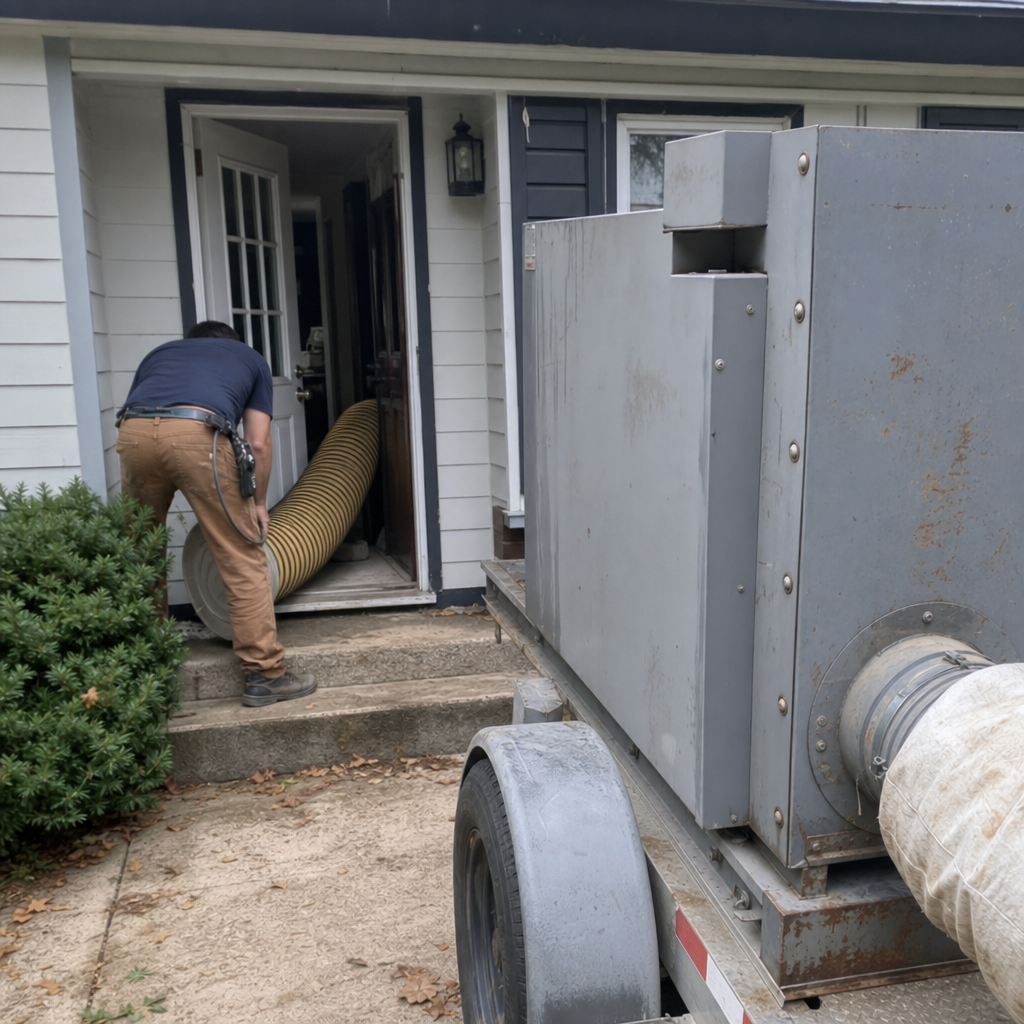
We use Nikro high-velocity dryer vent cleaning systems with integrated airflow measurement — the same equipment specified for commercial laundry and restoration applications. Here’s what that reveals:
- Pre-cleaning airflow in cubic feet per minute (CFM). A properly venting residential dryer should exhaust 100–150 CFM at the exterior cap. Readings below 50 CFM indicate hazardous restriction regardless of subjective “it seems fine.”
- Post-cleaning verification. We document airflow recovery. If cleaning doesn’t restore adequate CFM, we know there’s damage, disconnection, or improper installation requiring repair.
- Lint volume removed. Weighing collected lint gives concrete feedback — “2.3 pounds removed from a 20-foot run” tells you exactly what was accumulating unseen.
- Video inspection of inaccessible sections. For vent runs through finished walls, our camera systems identify damage, bird nesting, or construction debris that cleaning alone won’t address.
Rotobrush rotary brush systems supplement the Nikro equipment for heavy buildup and mechanical agitation. These aren’t consumer-grade shop vacs with a brush attachment — they’re contractor-level systems that generate the airflow and mechanical action to clear packed lint from extended runs.
We also distinguish true lint restriction from other Rochester-specific issues: ice-dammed caps (winter), rodent nesting in basement wall exits (common in older homes with deteriorated flashing), and crushed or sagging flexible ductwork in crawlspaces. Each requires different remediation; misdiagnosis wastes money and leaves the hazard unaddressed.
What Does Dryer Vent Cleaning Cost in Rochester?
If you’re wondering How Much Does Dryer Vent Cleaning Cost? (2026 Price Guide) — Rochester, NY, pricing depends on vent configuration, accessibility, and whether repair or rerouting is needed. For standard residential cleaning in Rochester’s typical housing stock:
| Service | Typical Range |
|---|---|
| Standard dryer vent cleaning (single-family, accessible exterior cap) | $129–$189 |
| Extended run cleaning (20+ feet, multiple elbows, basement exit) | $189–$279 |
| Multi-unit or commercial dryer vent systems | $279–$449 |
| Vent repair, rerouting, or cap replacement (if needed) | $89–$249 additional |
We provide exact quotes before beginning work — no surprises, no pressure to add services. Estimates are free: call (844) 593-2704 or request one through our Dryer Vent Cleaning in Rochester service page.
FAQs
Run the dryer on air fluff (no heat) for 10 minutes and check the exterior vent cap — if little or no air exits, the vent is restricted regardless of dryer function. A broken heating element produces cold, damp clothes; a blocked vent produces hot, still-damp clothes after extended cycles. If you’re uncertain, we can diagnose this in minutes during a free assessment — call (844) 593-2704.
Affordable Dryer Vent Cleaning in Rochester, NY costs $129–$279 and restores proper function in over 90% of cases; full vent replacement runs $400–$800+ and is only needed for damaged, improperly routed, or non-code-compliant systems. We only recommend replacement when cleaning cannot achieve safe airflow or when the existing vent material is unsafe (such as flammable plastic flex duct). Call for an inspection and we’ll show you exactly what your system needs — estimates are free.
We often can, especially for Rochester addresses within our standard service radius. Same-day service depends on current schedule and whether the issue requires immediate attention — late-stage signs like burning smell get priority. For non-urgent scheduling, we typically book within 2–3 business days. Call (844) 593-2704 to check today’s availability.
A lightly used, recently cleaned vent may yield only a few ounces; a neglected vent in a Rochester double with a 25-foot run often contains 2–4 pounds of packed lint. The volume itself isn’t the concern — it’s the restriction percentage. We measure airflow before and after; if we restore proper CFM, the cleaning succeeded regardless of lint weight. If you’re curious what your system contains, Matthew shows you the collection after every job — no mystery, no hidden debris.
When to Call for Assessment
If you’ve noticed any early-stage signs, if your vent configuration matches the “annual cleaning regardless” criteria above, or if you simply don’t know when your vent was last cleaned, we’re happy to provide the Best Dryer Vent Cleaning in Rochester, NY. Matthew Gonzalez personally handles every inspection — the same person who answers your questions on the phone is the one who arrives with the Rotobrush and Nikro equipment, measures your airflow, and explains what he found.
With 571 verified reviews averaging 4.9 stars, our reputation is built on exactly this transparency: showing up, doing the work ourselves, and reporting honestly. We’ve spent 17 years focused specifically on air duct and HVAC cleaning — not general handyman work, not franchise-mandated upsells — and we’ve adapted our methods to Rochester’s distinctive housing stock through thousands of local jobs.
If you’d rather have it looked at, Elite Air Duct Cleaning Service Greater Rochester offers a no-pressure assessment in Rochester — call (844) 593-2704.
Written by Matthew Gonzalez, Owner & Lead Technician at Elite Air Duct Cleaning Service Greater Rochester, serving Rochester, NY.