
Last updated July 12, 2026
Air Duct Cleaning Maintenance Checklist for Rochester Homeowners
Here’s something most Rochester homeowners don’t realize: a professional duct cleaning doesn’t have to be an annual event. In our 17 years working across Rochester—from Park Avenue bungalows to Greece ranch homes—we’ve found that homeowners who perform simple visual checks between cleanings can extend their results by 12–18 months. The catch? Most maintenance checklists are written for HVAC contractors, not for you. They’re packed with technical jargon about static pressure and CFM measurements that require tools you’ll never own. This guide flips that script. We’ve built a room-by-room checklist specifically for what Rochester homeowners can actually see, track, and act on—no equipment needed, just your eyes, your phone, and about 20 minutes twice a year.
Quick Answer
A practical air duct cleaning maintenance checklist for Rochester homeowners includes: quarterly filter checks (more frequent during heating season), biannual visual register inspections in every room, annual phone-photo documentation of duct condition, and immediate professional assessment when you spot dust rings at vents, musty odors at startup, or uneven temperatures between rooms. These simple habits, timed to Rochester’s sharp seasonal transitions, protect your indoor air quality and your investment in professional cleaning.
Table of Contents
- Why Rochester’s Climate Changes Your Maintenance Schedule
- The Room-by-Room Visual Inspection Routine
- Filter Tracking: What Heating-Heavy Winters Do to Filter Load
- How to Document Duct Condition with Phone Photos
- Three Warning Signs That Mean Call Now, Not Next Season
- What You Should Never Attempt Yourself (And Why)
- Your Rochester Seasonal Maintenance Timeline
- Common Mistakes to Avoid
- When to Call a Professional
- Frequently Asked Questions
Why Rochester’s Climate Changes Your Maintenance Schedule
Rochester isn’t Phoenix or Atlanta, and your duct maintenance shouldn’t pretend it is. Our Elite Air Duct Cleaning Service Greater Rochester home territory sits in a unique pressure zone: Lake Ontario moderates summer highs but fuels brutal winter lake-effect heating loads that run furnaces hard from November through April. That six-month heating season means your ducts move heated, often dry air continuously—unlike mixed climates where systems get regular off-cycles.
What this means practically: dust accumulation patterns in Rochester differ from national averages. The constant airflow creates more uniform coating throughout trunk lines, but the dryness generates more static cling at register surfaces. Meanwhile, our brief, humid summers can trigger condensation in unconditioned basement plenums—especially in older Rochester homes near the Genesee River watershed where basement humidity runs higher.
We’ve adjusted our Air Duct Cleaning in Rochester protocols specifically for this. Homes in Brighton or Pittsford with newer construction and tighter envelopes need different attention than drafty Victorians in the South Wedge. Your maintenance checklist should reflect these realities, not a generic national template.
Key climate factors for Rochester homeowners to track:
- Heating degree days: Rochester averages over 6,500 annually—your filter sees more particulate load than a comparable home in St. Louis
- Lake-effect particulates: Fine mineral dust from dry winter lake beds can infiltrate older duct seams
- Basement humidity spikes: July-August condensation cycles in unconditioned utility spaces
- Spring pollen pressure: April-May tree and grass pollen that overwhelms standard filters if not changed pre-season
The Room-by-Room Visual Inspection Routine
This is the core of your actionable checklist. We recommend performing this inspection twice yearly: mid-September before furnace startup, and mid-May after shutdown. Each room takes roughly two minutes. You’re not cleaning anything—you’re building observational skill that catches problems before they compound.
Living Areas and Bedrooms
- Remove the register cover—most pop off with gentle upward pressure or two screws
- Photograph the duct opening with your phone (flash on, we’ll explain why in the next section)
- Check for dust rings—a dark halo around the register edge where air turbulence deposits particulates; indicates airflow restriction or duct leakage pulling attic or wall cavity dust
- Sniff test at startup—first heating cycle each season, note any musty or sharp odors; brief dust smell is normal, persistent mustiness is not
- Feel for temperature consistency—after 10 minutes of runtime, all registers in the room should deliver similar air temperature
Kitchen and Bathrooms
These rooms have unique duct considerations. Kitchen supply vents near cooking zones accumulate grease-laden particulates faster—a problem we see frequently in Rochester’s compact East Avenue apartments and bungalow kitchens. Bathroom vents (if tied to central ductwork rather than independent exhaust) can harbor moisture-related biofilm.
- Check for sticky residue on kitchen register fins—indicates grease infiltration that standard filters won’t capture
- Look for rust staining around bathroom duct openings—signals past condensation events
- Verify bathroom exhaust actually vents externally, not into attic space (common in 1950s-70s Rochester construction)
Basement and Utility Room
This is where Rochester’s older housing stock reveals itself. In homes built before 1980—common in neighborhoods like Corn Hill, NOTA, and parts of Irondequoit—the main trunk line and plenum connections are often accessible and worth visual inspection.
- Locate your main trunk line—the large rectangular duct running from your furnace
- Check seams and joints for visible gaps or tape failure (foil tape should be intact, not brittle or peeling)
- Look for insulation degradation on exterior ductwork—Rochester’s freeze-thaw cycles degrade fiberglass wrap faster than stable climates
- Note any new debris beneath trunk lines—indicates interior deterioration or pest intrusion
Filter Tracking: What Heating-Heavy Winters Do to Filter Load
Here’s where Rochester’s climate hits your wallet directly. A standard 1-inch pleated filter rated for 90 days? In our market, that’s optimistic for peak heating season. We’ve pulled filters from Penfield and Webster homes in February that were completely loaded after 45 days—restricting airflow, straining blower motors, and forcing particulates around the filter rather than through it.
Your filter tracking protocol:
| Season | Check Interval | Replacement Trigger |
|---|---|---|
| Peak heating (Dec–Feb) | Every 30 days | Visible gray coating or reduced airflow at distant registers |
| Shoulder heating (Oct–Nov, Mar–Apr) | Every 45–60 days | Same as above, or date marked on filter frame |
| Cooling season (Jun–Aug) | Every 60–90 days | Visual inspection sufficient for most Rochester homes |
| Shoulder/off (May, Sep) | At seasonal transition | Always replace before first heating cycle |
We recommend writing the installation date directly on the filter frame with a permanent marker. For Rochester’s heating-intensive climate, upgrade to a 4-5 inch media filter if your system accommodates it—the larger surface area extends effective life significantly. Honeywell and Aprilaire both manufacture compatible media cabinets that integrate with common Rochester-installed equipment brands.
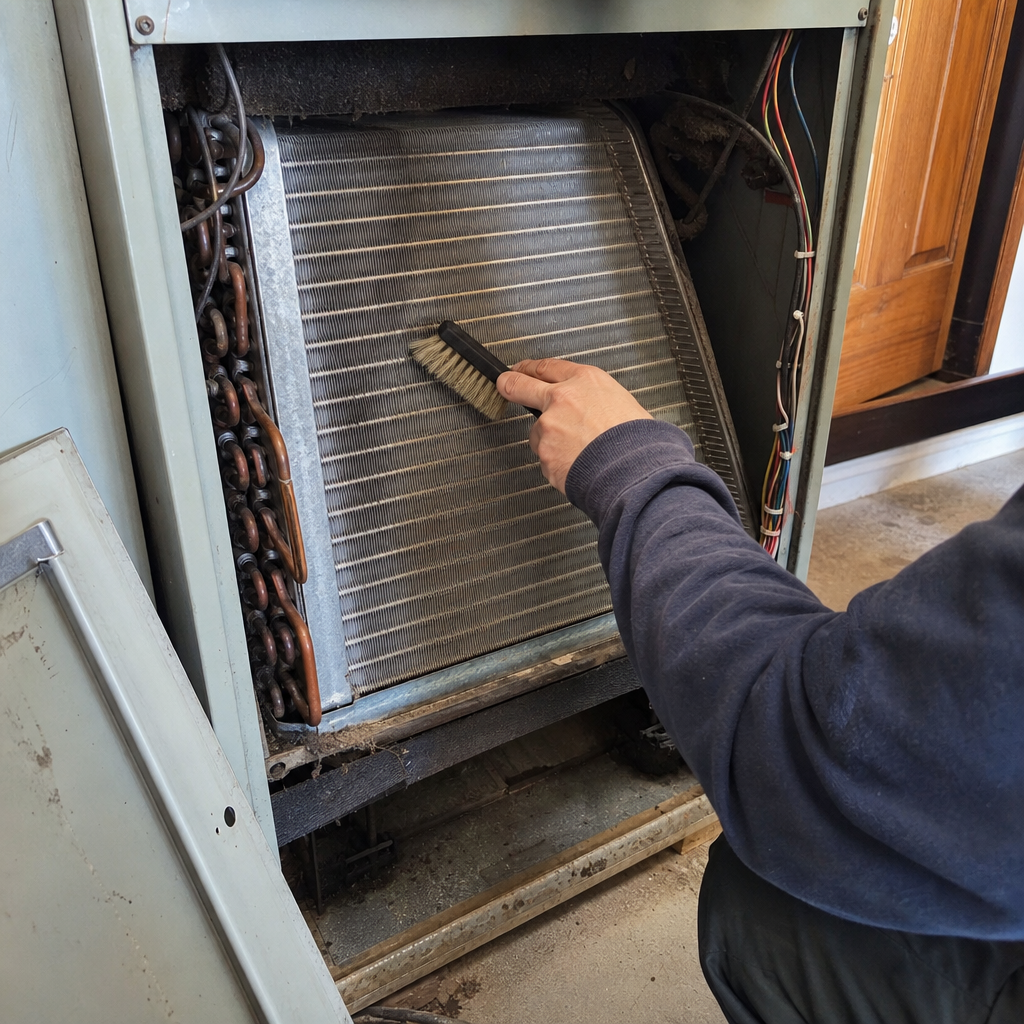
One critical note: never run your system without a filter, even briefly. The debris load in Rochester’s heating season will coat your blower wheel and evaporator coil within days, creating a contamination source that duct cleaning alone won’t resolve. Our HVAC Cleaning in Rochester service addresses exactly this kind of systemic buildup.
How to Document Duct Condition with Phone Photos
This technique has saved our Rochester customers hundreds in unnecessary service calls—and helped others justify timely intervention before small problems became expensive ones. The key is consistency: same angles, same lighting, same time of year.
- Standardize your shots: For each register, take three photos—register face removed, looking straight into duct (flash on), and angled to show duct wall condition
- Use a reference object: Place a quarter or pen in the frame for scale; this matters when comparing year-over-year buildup
- Organize by room: Create a phone album named “Duct Baseline [Year]” with sub-albums by floor
- Shoot during daylight: Natural window light plus phone flash reveals surface texture better than artificial room lighting alone
- Date and annotate immediately: Note any odors, temperature issues, or recent renovations that might affect dust load
Why this matters for Rochester specifically: our seasonal transitions create natural comparison points. A photo from September 2024 showing clean duct walls versus May 2025 showing significant coating tells a clear story about whether your current filter regimen and cleaning interval are adequate. When you do call for service, these photos let us assess whether you’re due for maintenance or dealing with an underlying issue like duct leakage pulling attic debris.
We’ve had Henrietta homeowners present two years of photo documentation that revealed a progressive pattern—ultimately traced to a deteriorating return duct boot in their crawl space. Caught early, the repair was straightforward. Without that visual history, they’d have paid for repeated cleanings treating symptoms rather than cause.
Three Warning Signs That Mean Call Now, Not Next Season
Most duct conditions evolve gradually, but three specific indicators demand immediate professional assessment regardless of your scheduled maintenance timeline. We’ve learned to treat these as non-negotiables in our Rochester work.
1. Dust Rings at Registers
That dark halo around your register edges isn’t cosmetic—it’s evidence of air turbulence pulling particulates from surrounding wall or ceiling cavities. In Rochester’s older homes with plaster-and-lath construction, this often indicates register boots that have separated from framing, creating a bypass path for attic or wall cavity air. The dust ring is essentially a fingerprint of hidden leakage. Left unaddressed, you’re filtering and conditioning air that never reaches your living space, while unfiltered cavity air enters your supply stream.
2. Musty Odors at Seasonal Startup
A brief dust smell when first firing the furnace in October is normal—settled particulates burning off heat exchanger surfaces. But persistent mustiness, especially if it returns after the first 24 hours of runtime, suggests moisture accumulation in your duct system. Rochester’s summer humidity, combined with air conditioning that may have run sporadically, creates ideal conditions for microbial growth in low-velocity duct sections. This isn’t a DIY cleaning scenario—improper disturbance can release concentrated spores into your living space.
3. Uneven Room Temperatures
When your master bedroom runs five degrees cooler than your living room despite open vents, the problem often isn’t your furnace—it’s duct restriction or leakage. In Rochester’s split-level and raised-ranch stock (common in Chili, Gates, and northern Greece), long duct runs to second-story rooms are particularly vulnerable. Partial blockage from collapsed flex duct, rodent nesting material, or accumulated debris can throttle airflow to specific zones. Your system’s response—running longer to satisfy thermostat demand—drives energy costs up while comfort drops.
What You Should Never Attempt Yourself (And Why)
We’re straightforward about this because we’ve seen the aftermath. Some Rochester homeowners, rightly skeptical of low-quality duct cleaning offers, attempt aggressive DIY intervention and create bigger problems. Here’s where we draw clear lines.
Inside plenum cleaning: The plenum—large sheet-metal chamber directly above your furnace or below your air handler—contains electrical components, gas connections, and high-temperature surfaces. Even powered-off systems retain capacitive charge in blower motors. More critically, disturbance here can breach critical seals or damage heat exchanger integrity. This is exclusively professional territory requiring proper lockout/tagout procedures.
Flex duct work: The flexible duct common in Rochester additions and retrofits (1990s-2000s construction in Fairport, Perinton, Victor areas) has fragile inner liners that tear easily with contact. A homeowner’s attempt to “snake” a brush through flex duct typically destroys the liner, creating leakage points that are expensive to locate and seal. Our Rotobrush and Nikro systems use calibrated soft-bristle configurations specifically designed for flex duct integrity.
Main trunk line access: Cutting access panels into sheet metal trunk lines—sometimes suggested in online DIY forums—requires precise sealing restoration. Improperly sealed access points become major leakage sources, potentially pulling basement or crawl space air into your supply stream. We’ve replaced entire trunk sections where well-meaning homeowners created irreparable damage.
Mold or biofilm treatment: Any visible growth in ductwork demands professional assessment of underlying moisture sources, not surface cleaning. EPA-registered sanitizers require specific application protocols and dwell times. Misapplied consumer products can leave residues that become airborne irritants or damage coil coatings.
What you can safely do: register cover cleaning (soak in warm detergent solution), visible dust removal from boot interiors with a vacuum hose attachment, filter changes, and the documentation routine described above. These actions genuinely help and carry no risk.
Your Rochester Seasonal Maintenance Timeline
Timing your checks to Rochester’s actual weather patterns, not generic calendar advice, maximizes their value. Here’s the rhythm we’ve refined over 17 years.
| Timing | Action | What You’re Checking For |
|---|---|---|
| Mid-September | Pre-heating full inspection | Summer humidity effects, filter status, register condition after cooling season |
| October 1 | Install fresh filter, mark date | Baseline for heating season particulate load |
| December 1 | First heating-season filter check | Premature loading from startup dust surge |
| February 1 | Peak heating filter inspection | Heavy-load condition; replacement likely needed |
| Mid-March | Pre-shutdown assessment | Cumulative season effects; photo documentation |
| Mid-May | Post-heating full inspection | Register condition, odor check, temperature balance |
| June 1 | Cooling season filter install | Fresh start for brief Rochester cooling period |
For homes with Dryer Vent Cleaning in Rochester needs—typically every 12-18 months in our lint-heavy cotton and fleece climate—schedule this alongside your September or May duct inspection for efficiency.
Common Mistakes to Avoid
- Assuming “no visible dust” means clean ducts. Most contamination collects in trunk lines and return plenums—areas you can’t see without specialized cameras. Surface register cleanliness is a poor proxy for system condition.
- Using the cheapest filter available. Fiberglass “rock-catcher” filters protect your blower from large debris but miss the fine particulates that accumulate in ductwork. In Rochester’s heating-intensive climate, this false economy accelerates duct contamination.
- Ignoring return air pathways. Homeowners obsess over supply registers but rarely inspect return grilles—yet returns pull air (and debris) from your living space, making them equally important monitoring points.
- Blocking vents in unused rooms. A common winter practice in Rochester’s larger homes actually increases duct pressure and can force leakage at weak seams. Better to adjust dampers at the trunk if your system has them.
- Trusting “whole-house” DIY cleaning kits. The rotary brush systems sold at hardware stores lack the suction power and HEPA containment of professional equipment like our Nikro negative-air systems. They typically redistribute debris rather than remove it.
- Waiting for visible mold before acting. By the time growth is visible at registers, it’s typically established throughout the system. Musty odors or allergy symptom patterns are earlier, more actionable indicators.
- Neglecting post-renovation assessment. Rochester’s active renovation market—especially in Park Avenue, South Wedge, and NOTA historic properties—generates extraordinary particulate loads. Schedule professional inspection after any major drywall, flooring, or demolition work.
When to Call a Professional
Your maintenance checklist is a powerful early-warning system, not a replacement for periodic professional service. Call for assessment when: you’ve documented progressive buildup in your photo history; any of the three warning signs appear; you’re purchasing a home with unknown duct history (standard inspections don’t cover this); or you’re experiencing unexplained respiratory symptoms that correlate with system runtime.
Elite Air Duct Cleaning Service Greater Rochester offers free estimates in Rochester—call (844) 593-2704. Matthew shows up on every job, and we’ll review your documentation with you to determine whether cleaning, repair, or simply adjusted maintenance intervals are the right next step. With 17 years focused exclusively on air duct and HVAC cleaning, we’ve seen what Rochester’s specific conditions do to duct systems, and we’ll tell you honestly what you’re dealing with.
Frequently Asked Questions
Most Rochester homes benefit from professional air duct cleaning every 3–5 years, though homes with pets, recent renovations, or occupants with respiratory sensitivities may need more frequent service. Our heating-intensive climate accelerates particulate accumulation compared to milder markets, so we assess each home’s actual condition rather than applying a rigid schedule. Call (844) 593-2704 for a free estimate and honest interval recommendation based on your specific situation.
A shop vacuum can remove loose debris from accessible register boots but cannot reach the trunk lines, plenums, or branch ducts where most contamination accumulates. More importantly, without HEPA containment and negative air pressure, DIY disturbance releases fine particulates into your living space. For Rochester homeowners, we recommend sticking to register surface cleaning and leaving system-wide work to professional-grade Rotobrush and Nikro equipment.
Brief dust odor at seasonal startup is normal as settled particulates encounter hot surfaces, but persistent mustiness indicates moisture accumulation or microbial growth in your duct system—common in Rochester’s humid summers when air conditioning runs intermittently. If the smell lasts beyond 24 hours of continuous furnace operation, schedule professional assessment rather than masking with air fresheners.
Regular filter changes protect your blower and coil but don’t prevent gradual accumulation in duct trunk lines and return plenums—areas filters never contact. Think of it like changing your car’s oil: essential maintenance, but not a substitute for periodic deeper service. Your photo documentation routine will reveal when professional cleaning is actually needed versus when you’re still in maintenance-only territory.
Air duct cleaning addresses the distribution network—supply and return ducts, registers, and boots. HVAC cleaning extends to the mechanical components: blower wheel, evaporator coil, heat exchanger, and condensate pan. In Rochester’s heating-dominant climate, blower wheels and coils accumulate significant debris that restricts airflow and harbors moisture. We often recommend combining services for complete system restoration, which you can explore through our HVAC Cleaning in Rochester service page.
Verify they use professional-grade equipment (ask specifically about Rotobrush, Nikro, or comparable industrial systems), confirm owner or technician credentials and tenure, check for substantial review volume with detailed feedback, and be wary of phone quotes without inspection. In our market, legitimate operators will inspect your system before pricing and explain what they found. See what 571 homeowners experienced with our transparent, inspection-first approach.
The Bottom Line
Rochester’s climate demands a Rochester-specific approach. The checklist we’ve outlined—room-by-room visual inspection, climate-adjusted filter tracking, photo documentation, and clear boundaries on DIY scope—gives homeowners genuine control over their indoor air quality without pretending they’re HVAC technicians. The goal isn’t to eliminate professional service; it’s to time it right, justify it with evidence, and extend the value of each cleaning through informed observation. From cleaning to sealing to sanitizing, the full picture matters. Start your documentation this season, and you’ll never again wonder whether your ducts need attention or you’re just being marketed to.
Written by Matthew Gonzalez, Owner & Lead Technician at Elite Air Duct Cleaning Service Greater Rochester, serving Rochester since 2009.