
How Often to Clean Air Ducts in Rochester, NY: Every 2–3 Years for Most Homes
For Rochester homeowners wondering Is Air Duct Cleaning Worth It? (Rochester, NY), we recommend scheduling air duct cleaning every 2–3 years instead of the generic 3–5 year guideline you’ll see elsewhere. That shorter interval accounts for one of the longest heating seasons in the continental U.S. — our furnaces run from October through April or May, accumulating blower hours at roughly double or triple the rate of mild-winter markets. If you’re unsure where your system stands, call us at (844) 593-2704 for a free visual assessment.
The “3 to 5 years” rule you’ll find on every duct cleaning FAQ was not written with Rochester winters in mind. Run your furnace for 180 days a year and that interval shrinks. We see it firsthand: a homeowner in Charlotte, North Carolina might clock 800 annual blower hours, while a Rochester homeowner in Irondequoit or Greece easily hits 2,000-plus. That’s not a minor difference — it’s the difference between debris accumulation that’s manageable and debris that’s been baked into your duct walls across multiple heating seasons.
Why Blower Hours Matter More Than Calendar Years
We stopped giving calendar-based advice years ago. Matthew Gonzalez, our owner and lead technician, tracks runtime because it’s the only honest metric. Every hour your blower spins, it’s pulling dust, dander, skin flakes, and mold spores through the return and pushing conditioned air — and whatever’s clinging to your ducts — back into your rooms.
Here’s how Rochester stacks up against shorter-winter markets:
- Rochester, NY: 1,800–2,400 annual blower hours (October–April/May continuous heating, plus shoulder season cycling)
- Atlanta, GA: 600–900 annual blower hours (mild winters, intermittent heating)
- Phoenix, AZ: 2,000-plus annual blower hours, but dry climate reduces microbial growth risk
That Atlanta homeowner can reasonably wait 4–5 years. In Rochester, those same 4–5 years represent 7,000–10,000 blower hours — the equivalent of 8–10 years in a milder climate. The debris load isn’t theoretical; we pull it out of ducts every week.
The other factor compressing Rochester’s interval is Lake Ontario humidity. Our shoulder seasons — especially October and April — bring persistent moisture into homes even when furnaces aren’t running full-time. Relative humidity in the 55–70% range, combined with organic debris already in your ducts, creates conditions for microbial growth that dry-climate cities simply don’t face. We’ve opened access panels in Park Avenue doubles and found visible spotting on duct interiors that the homeowners had no idea existed, because the system “worked fine.”
What Rochester’s Housing Stock Does to Your Ducts
Rochester’s city neighborhoods are packed with pre-WWII homes that were originally heated by gravity “octopus” furnaces and later converted to forced-air systems in the 1950s–70s. Those retrofitted duct runs — often reusing oversized sheet-metal gravity trunks or crammed into spaces never designed for ductwork — are now 50–70 years old and loaded with accumulated debris. The chronic moisture rolling off Lake Ontario gives mold a persistent foothold inside them that cities without a Great Lake at their doorstep simply don’t face at the same rate.
The doubles scenario is particularly relevant here. Rochester’s urban core and inner-ring suburbs — Irondequoit, Gates, Greece — are dominated by early-20th-century two-family “doubles” with branched duct systems retrofitted to serve two separate units. Technicians working these properties routinely discover that a single furnace and trunk line was split mid-century to heat both floors with no balancing dampers. What looks like one system on the surface is effectively two contaminated networks sharing the same main duct. Each new tenancy introduces a different allergen profile, and four years with three different tenant combinations creates a fundamentally different cleaning need than four years with one family.
Matthew tells landlords: track tenant turnover, not just the calendar. A visual check between tenancies often reveals conditions that would never trigger a homeowner’s attention — but absolutely affect the next occupant’s air quality.
Rochester-Specific Triggers That Override Any Fixed Schedule
Even our 2–3 year guideline has exceptions. These local conditions should push you toward immediate inspection regardless of when you last cleaned:
- Wet basement season infiltration: Rochester’s spring thaw and heavy rains push moisture into basements and crawlspaces. If water reached your return ductwork, debris that was dry and inert becomes a growth medium within weeks.
- Post-renovation: Drywall dust from even a modest kitchen remodel circulates through your entire system for months. We use our Air Duct Cleaning process with professional-grade Rotobrush and Nikro equipment to remove construction particulate that consumer vacuums can’t touch.
- New pet acquisition: Pet dander loads increase exponentially, not linearly. A golden retriever produces roughly 3–5 times the dander of a short-haired cat, and that material concentrates in bedroom return ducts where animals sleep.
- Respiratory conditions in occupants: Asthma, COPD, or post-viral sensitivities mean the same debris load has outsized health impact. We don’t upsell on fear — but we won’t pretend a 5-year interval is medically neutral either.
- Visible mold or persistent musty odor: Lake Ontario humidity means this isn’t a “wait and see” situation. Matthew does every inspection personally, and he’d rather tell you what’s actually in there than tell you what you want to hear.
Matthew’s Practical Rule: The Two-Year Visual Check
Here’s what we actually tell our regular customers in Rochester: schedule a visual inspection every two years even if a full cleaning can wait. The octopus-conversion and branched-double duct systems in this city develop isolated problem zones — dead-end runs, disconnected sections, access panels that have worked loose — that only show up during an in-person look.
Our visual check takes 20–30 minutes. We bring a borescope camera, examine 3–4 representative duct sections, and show you what we see. No charge, no pressure. If it’s clean, we’ll tell you to wait. If there’s a disconnected return pulling air from your crawlspace, we’ll show you the video and explain your options.
This approach has kept us in business for 17 years with 571 verified reviews averaging 4.9 stars. See what 571 homeowners experienced — the proof is in the pattern, not the pitch.
What Professional Duct Cleaning Costs in Rochester
Pricing varies with system size and condition, but Rochester homeowners should expect these ranges for owner-operated, equipment-based service; see our guide to Whole House Air Duct Cleaning Cost in Rochester, NY for more detail:
| Service | Typical Range | What Affects Price |
|---|---|---|
| Standard residential duct cleaning (single system, up to 12 vents) | $350–$550 | Vent count, accessibility, contamination level |
| Doubles / two-unit properties (shared trunk) | $500–$800 | Branch complexity, separate returns, access panel locations |
| HVAC cleaning (coils, blower cabinet, housing) | $200–$400 add-on | System age, coil condition, Guardsman or Abatement Technologies treatments if needed |
| Air quality sanitizing | $150–$300 add-on | EPA-registered antimicrobial application, post-cleaning |
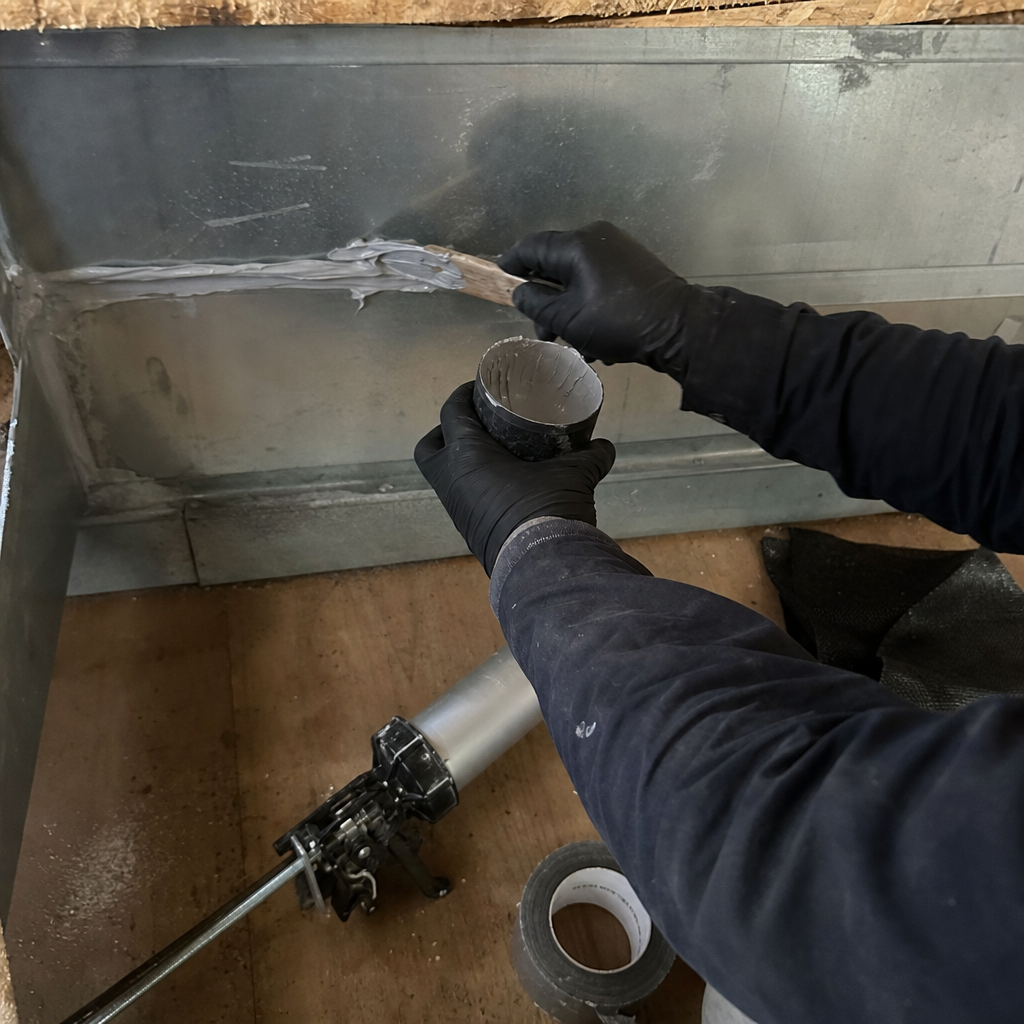
| Duct repair & sealing (minor) | $200–$500 | Disconnected runs, access panel replacement, mastic sealing |
Franchise chains often quote low and upsell on arrival. We don’t. Matthew shows up on every job, assesses what your system actually needs, and prices before work begins. From cleaning to sealing to sanitizing, it’s all under one roof — no subcontractors, no surprises.
For a detailed breakdown of our full process, visit our Air Duct Cleaning in Rochester page.
How to Tell If You’re Past Due: A Homeowner’s Checklist
Not sure whether you’re inside or outside that 2–3 year window? These observable conditions suggest your ducts are telling you something:
- Visible dust puffing from registers when the system kicks on
- Uneven heating between rooms — especially common in Rochester’s retrofitted doubles with no balancing dampers
- Musty or stale odor when the furnace first cycles in fall
- Excessive dust accumulation on furniture within days of cleaning
- Increased allergy symptoms during heating season specifically
- Previous owner/tenant unknown — no maintenance history
Any two of these conditions together warrant a call. One alone might be explainable by other factors; two suggests your ductwork is contributing.
What Happens During a Professional Cleaning
We use professional-grade Rotobrush and Nikro systems — the same brands restoration contractors deploy after fire and water damage — not consumer-grade shop vacs with brush attachments. The process takes 3–5 hours for a typical Rochester home:
- Pre-inspection with borescope photography — we show you the “before” condition
- Register and return cover removal, protective floor covering
- Agitation brushing with HEPA-contained vacuum extraction at each vent
- Main trunk line cleaning with negative air pressure and mechanical whipping
- HVAC component cleaning (blower, coils, housing) if included
- Post-cleaning verification photography
- Optional air quality sanitizing with EPA-registered products
Matthew handles the inspection and lead technician work personally. 17 years, one focus — that’s the difference between someone who knows how to adapt for a 1950s octopus conversion and someone following a franchise checklist written for suburban new construction.
FAQs
Every 2–3 years for most Rochester homes, compared to the generic 3–5 year recommendation. Our extended heating season — running furnaces from October through April or May — means local homeowners accumulate 2,000-plus annual blower hours, roughly double or triple mild-winter markets. Call (844) 593-2704 for a free visual check if you’re unsure where your system falls.
Repair and sealing is almost always more cost-effective than full replacement in Rochester’s pre-WWII and postwar housing stock. Full replacement runs $3,000–$7,000 and often requires structural modifications for gravity-conversion systems, whereas targeted duct repair & sealing — reconnecting separated runs, replacing access panels, mastic-sealing leaks — typically resolves performance issues at $200–$500. We assess whether repair is viable before recommending replacement; call (844) 593-2704 for an honest evaluation.
Dirty ducts themselves don’t typically cause acute illness in healthy adults, but they absolutely amplify existing conditions and contribute to chronic symptoms. In Rochester’s humid climate, ducts with accumulated debris plus moisture can harbor mold, dust mites, and bacterial growth that triggers asthma, allergies, and respiratory irritation — particularly in children, elderly occupants, and those with compromised immune systems. The risk isn’t theoretical; we document it with borescope footage weekly. If someone in your household has worsening respiratory symptoms during heating season, a duct inspection is a rational diagnostic step. Call (844) 593-2704 for a no-pressure assessment.
Verify three things: owner-on-site accountability (not subcontractor crews), professional equipment brands they can name (Rotobrush, Nikro, Abatement Technologies — not “state-of-the-art” vagueness), and substantial verified review volume with detailed customer feedback. Matthew Gonzalez personally leads every job as owner and lead technician, and our 571 verified reviews at 4.9 stars reflect consistent repeat performance. Be wary of $99 whole-house specials — proper duct cleaning requires 3–5 hours with professional equipment, and shortcuts leave debris behind. Call (844) 593-2704 to ask questions directly; Matthew answers the phone.
If you’d rather have it looked at, Elite Air Duct Cleaning Service Greater Rochester offers a no-pressure assessment in Rochester — call (844) 593-2704 for a free estimate.
Written by Matthew Gonzalez, Owner & Lead Technician at Elite Air Duct Cleaning Service Greater Rochester, serving Rochester, NY.