
Is Air Duct Cleaning Worth It in Rochester, NY? Here’s What 17 Years of Local Jobs Actually Shows
Air duct cleaning is worth it for most Rochester homeowners with pre-1980 housing stock, visible debris at registers, or anyone in the household with respiratory sensitivities — and it’s often unnecessary for newer homes with clean, purpose-built systems. The difference comes down to your home’s age, your ductwork’s condition, and whether Rochester’s specific climate and housing history have worked against you. If you’re unsure where you fall, call us at (844) 593-2704 and Matthew will walk you through what to look for before you spend a dollar.
The EPA Study Everyone Cites Wasn’t Run on a Rochester Double with Lake Ontario 10 Miles Upwind
The 1997 EPA literature review that skeptics lean on — the one concluding “duct cleaning has never been shown to actually prevent health problems” — studied homes with average age, average moisture, and average duct design. Rochester doesn’t do average.
Our city’s housing stock is dominated by early-20th-century doubles, Craftsman bungalows, and 1950s–60s ranch homes in neighborhoods like Irondequoit, Gates, and Greece. Many of these were originally heated by gravity “octopus” furnaces and later converted to forced-air systems in the 1950s–70s. Those retrofitted duct runs — often reusing oversized sheet-metal gravity trunks or crammed into spaces never designed for ductwork — are now 50–70 years old and loaded with accumulated debris. The chronic moisture rolling off Lake Ontario gives mold a persistent foothold inside them that cities without a Great Lake at their doorstep simply don’t face at the same rate.
The EPA’s own position, read carefully, carves out explicit exceptions where cleaning is warranted: documented mold growth, vermin infestation, and excessive debris. Rochester’s combination of aging retrofitted ductwork and lake-effect moisture puts a disproportionate share of local homes inside those exceptions — not as edge cases, but as standard conditions we encounter weekly.
Who Benefits Most vs. Least: A Rochester Breakdown
After 17 years of opening return plenums across the greater Rochester region, we’ve developed a pretty reliable sense of who gets measurable value from cleaning and who’s better off spending their money elsewhere.
Cleaning is typically worth it if:
- Your home was built before 1960 with original or retrofitted sheet-metal ductwork
- You can see dust buildup on register faces or smell musty air when the blower cycles
- Anyone in your household has asthma, allergies, or chronic respiratory issues
- You’ve completed renovations without sealing returns — drywall dust doesn’t stay in the room you renovated
- Your furnace blower runs almost daily from October through April or May (which describes most Rochester heating systems)
- You’ve never had ducts cleaned, or it’s been 10+ years
Cleaning offers less certain payback if:
- Your home was built after 1990 with a purpose-designed duct system
- Registers are clean, airflow is balanced, and there’s no moisture history
- You’ve had professional cleaning within the past 3–5 years with no intervening construction or water intrusion
Matthew’s been straightforward about this since he started: we’ve talked homeowners out of cleanings when the return plenum shows minimal debris and the system’s running clean. There’s no schedule to fill with subcontractor crews — it’s just Matthew on every job, and he’d rather tell you what’s actually in there than tell you what you want to hear.
The Heating-Season Math: Why Rochester’s Timeline Is Different
Rochester averages over 100 inches of snow annually from Lake Ontario lake-effect systems. Our forced-air heating season runs 180+ days per year — one of the longest in the continental U.S. That means your furnace blower cycles almost daily for six-plus months, pulling dust, dander, pollen, and mold spores into ductwork with every cycle.
Compare that to a market like Charlotte or Atlanta, where heating might run 60–90 days. Even if you accept the “not routinely necessary” framing, the cadence of necessity arrives faster here. The same debris load that takes five years to accumulate in a milder climate can build in three in Rochester — and that’s before accounting for our older, leakier duct systems that pull attic and crawlspace air into the return side.
We regularly open returns in city doubles where a single furnace and trunk line was split mid-century to heat both first and second-floor units with no balancing dampers. What looks like one system on the surface is effectively two contaminated networks sharing the same main duct — a setup that catches out-of-town crews off guard but is a known signature of Rochester’s rental housing conversion era. That structural complexity means debris accumulates unevenly and standard cleaning protocols have to be adapted, not just run through on autopilot.
What Matthew Looks For: The Observable Benchmark That Settles “Worth It”
When we arrive for a first-time inspection, Matthew opens the return plenum with the homeowner present when possible. Here’s what he’s assessing:
| What We Find | What It Means for Value |
|---|---|
| Debris depth exceeding 1/8 inch on trunk line surfaces | Cleaning will improve airflow and reduce blower strain — measurable payback |
| Visible biological growth or musty odor at plenum opening | Indicates moisture intrusion; cleaning plus source remediation is warranted |
| Particulate packed tightly at register boots in older homes | Common in Rochester’s retrofitted systems; restricted airflow affects comfort and efficiency |
| Clean metal with light surface dust only | Cleaning value is marginal; we say so |
The register face tells its own story. If wiping a return grille produces a visible smear of dark debris, that’s surface evidence of what’s deeper in the system. In Rochester’s 50–70-year-old ductwork, that surface evidence almost always corresponds to meaningful accumulation in the trunk lines — the difference is whether it’s layered dust and dander, or dust plus moisture-activated biological growth.
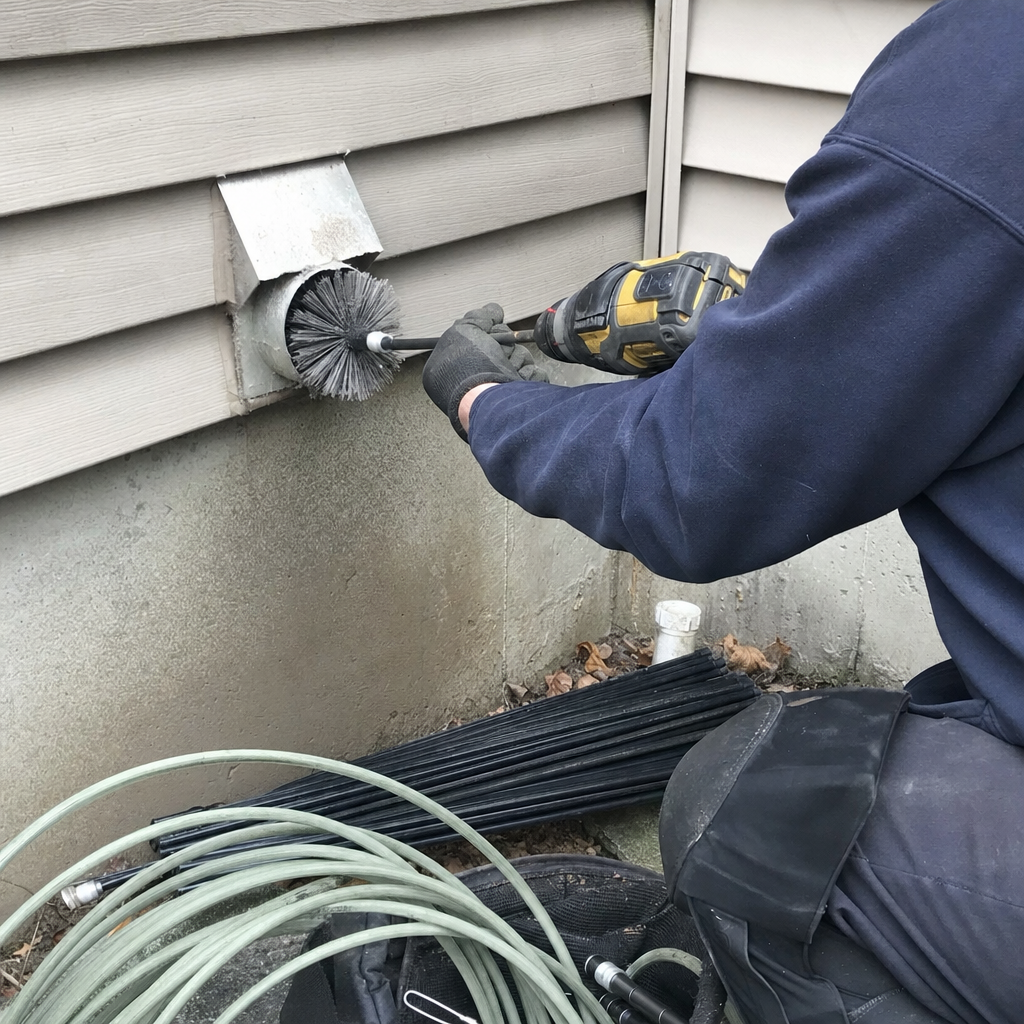
Our Air Duct Cleaning process uses professional-grade Rotobrush and Nikro systems — the same contractor-level equipment used in industrial and restoration settings, not consumer-grade shop vacs with a long hose attachment. For homes with sanitizing needs, we work with Aprilaire and Abatement Technologies products designed for occupied-space application. The tool choice matters because Rochester’s older ductwork has seams, joints, and retrofit patches that aggressive or inappropriate equipment can damage.
What Does Air Duct Cleaning Cost in Rochester, and What Drives the Price?
Pricing varies with system complexity, accessibility, and condition — there’s no honest flat rate that covers every Rochester home accurately. If you’re wondering how much does air duct cleaning cost in 2026, here’s what homeowners typically invest based on our 2024–2025 local work:
| Service Level | Typical Rochester Range | What It Covers |
|---|---|---|
| Standard residential duct cleaning (single system, ranch or bungalow) | $350 – $550 | Supply and return trunk lines, branch ducts, register boots, basic debris removal |
| Complex system (city double, split trunk, or multi-level with access challenges) | $550 – $850 | Adapted protocol for retrofitted or branched systems, additional access points, longer runtime |
| With air quality sanitizing | Add $150 – $250 | Application of EPA-registered sanitizing agent, particularly for moisture-affected systems |
| Duct repair & sealing (when needed) | $200 – $600+ | Sealing accessible leaks with appropriate materials, minor patch repair |
The lowest legitimate price you’ll find for affordable air duct cleaning in Rochester, NY with actual professional equipment and thorough trunk-line cleaning is rarely under $300 for a standard home. Offers at $99–$149 are typically bait-and-switch operations using shop vacs, cleaning only visible register areas, or upselling aggressively once inside. We’ve been called in after those jobs to do the work that wasn’t done.
FAQs
It can still be worth it for system efficiency and equipment longevity, especially in Rochester’s older housing stock — learn more about whole house air duct cleaning cost in Rochester, NY. A blower working against restricted airflow runs longer cycles, draws more power, and wears faster — we’ve measured temperature recovery improvements after cleaning in homes where occupants reported no health complaints. That said, if your home is newer with clean registers and no moisture history, the payback is less certain. Call (844) 593-2704 for an honest assessment of your specific system.
For Rochester’s pre-1980 homes with original ductwork, every 3–5 years is a reasonable interval given our extended heating season and lake-effect moisture conditions. Newer homes with no construction activity, no moisture events, and no respiratory sensitivities can often go 5–7 years. The key variable isn’t calendar time — it’s what’s actually accumulated. We inspect before recommending any cleaning, and we’ll show you what we find.
Register cleaning removes visible surface debris but doesn’t address the trunk lines and plenum where most accumulation occurs — especially in Rochester’s older systems with decades of layered buildup. Consumer tools can’t reach or agitate debris in 50-foot sheet-metal runs effectively. If your registers are heavily soiled, that’s usually surface evidence of deeper accumulation that professional equipment is designed to address.
The $99 special typically covers register vacuuming with a shop vac and aggressive upselling; our service cleans supply and return trunk lines with Rotobrush and Nikro professional systems, includes register boots and accessible branch lines, and is performed by Matthew Gonzalez personally — the same technician who answers your call. No subcontractor crews, no commission pressure, and we turn down jobs where cleaning won’t make a measurable difference. See what 571 homeowners experienced in our verified reviews.
When Matthew Turns Down a Job — And Why That Matters
Owner-operators don’t have franchise quotas to hit. Last month in a Greece ranch home built in 1992, Matthew opened the return and found clean metal with light surface dust — maybe two years of normal accumulation. He told the homeowner to check again in three years, recommended a high-quality filter upgrade, and left without charging for a cleaning. That homeowner will call us when they actually need service, and they’ll tell their neighbors.
That accountability — Matthew shows up on every job, does the work himself, and explains what he found — is why 571 reviews average 4.9 stars. It’s also why we don’t worry about the national debate over whether duct cleaning “works.” In Rochester’s specific conditions, with our specific housing stock and climate, the question isn’t whether cleaning works. It’s whether your home is among the substantial local population where the conditions justify it.
Key Takeaways
- Rochester’s 50–70-year-old retrofitted duct systems and Lake Ontario moisture put many local homes in the EPA’s own exceptions where cleaning is warranted
- 180+ days of annual heating means debris accumulates faster here than in milder climates
- Pre-1960 homes with original ductwork, visible register debris, or respiratory sensitivities see the clearest payback
- Newer homes with clean systems and no moisture history may not benefit measurably
- Professional-grade equipment and owner-on-site accountability separate legitimate service from bait-and-switch operations
If you’d rather have it looked at, Elite Air Duct Cleaning Service Greater Rochester offers a no-pressure assessment in Rochester — call (844) 593-2704 and Matthew will walk you through what he finds before any work is scheduled.
Written by Matthew Gonzalez, Owner & Lead Technician at Elite Air Duct Cleaning Service Greater Rochester, serving Rochester, NY.